
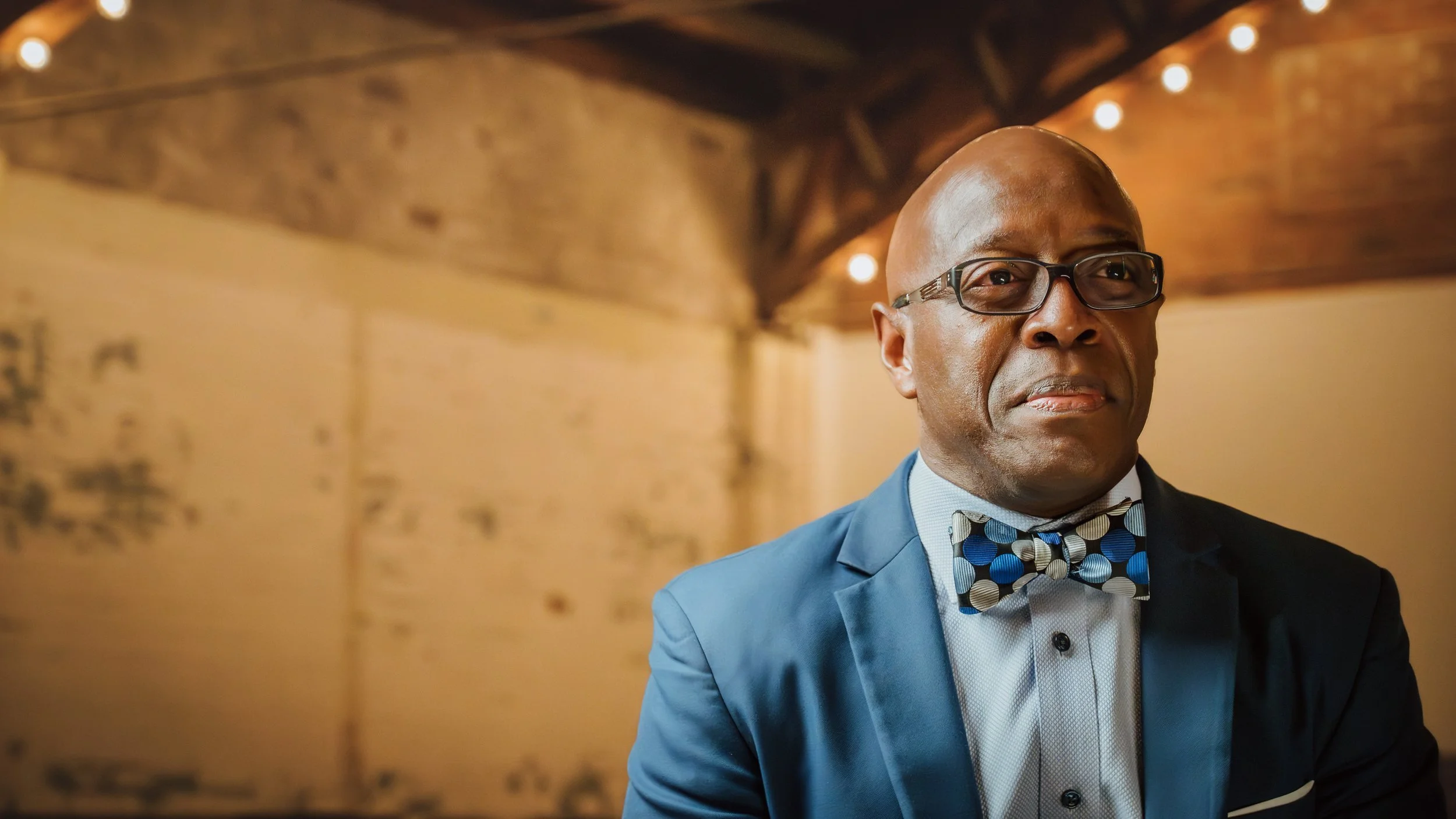
Herbert Drayton III is the managing partner of HI Mark Capital, a venture fund that invests in Black, Indigenous and people-of-color (BIPOC) and women entrepreneurs, mostly in tech-enabled companies across the Southeast. He is also the founder of the first majority Black-owned venture firm in South Carolina, a former Marine, and a serial entrepreneur who has built a dozen companies over 25 years. In this episode of Footnotes, John Barnes talks with him about how trust is built with both investors and founders, what a venture investor listens for in a first meeting, and why every pitch should be shorter than your favorite song. If you run a company between $5 million and $50 million in revenue, or you are thinking about raising capital, there is a lot here for you.
Why did a venture fund for BIPOC and women founders get a room leaning in?
Herbert says two things made people lean forward when he described HI Mark Capital: at the time, South Carolina had no majority Black-owned venture firm, and there is a persistent perception that BIPOC and women entrepreneurs do not build high-growth companies. He says that perception is simply not true. When he launched the fund he was told he would face two obstacles. First, as a first-time fund manager he had no track record, and the record does not start until fund one exists. Second, some people insisted there would not be enough qualified businesses to invest in. He has since talked with more than 300 entrepreneurs and more than 300 limited partners to prove otherwise.
"Every entrepreneur gets 30 minutes."
Herbert Drayton III
How do you build trust with investors and founders at the same time?
A fund manager sits in the middle: investors have to trust his judgment, and founders have to trust his process. Herbert says his comfort in that seat comes from decades as an entrepreneur himself. He has run into the same barriers his founders face, so he can have granular conversations with them. On the investor side, he leaned on organizations that already had trust. He joined the Coastal Community Foundation in Charleston in 2016 and became its chair last year. That introduction led to Bank of America making the first matching commitment to his fund, and it opened doors to state-backed small business funds as well. His summary is that trust travels with you, and it grows where you already are before it spreads.
For founders, trust starts with access. He promises every entrepreneur 30 minutes if the introduction comes from a trusted source, and he now goes a step further: when someone fills out the contact form on his website, he finds a date within 30 days and sends them an invitation rather than a link. Nobody has ever declined, because nobody expects it.
"Trust travels."
Herbert Drayton III
What does a venture investor listen for in the first meeting?
Herbert says the first filter is whether the company is actually investable for venture capital. If an owner really needs a loan, he does not force venture dollars on them. He points them to a community development financial institution (CDFI) and, where he has a relationship, sends along the application paperwork and checks back with the lender himself. If the company is venture-ready, the question becomes whether the founder can listen.
Many founders from BIPOC and women-led businesses do not have what he calls the invisible ecosystem: a lawyer, a CPA or a marketing professional in the family. They have been doing every one of those jobs alone. He may tell a founder to bring in fractional leadership or run a request for proposals to find a marketing firm, because two thousand followers on Facebook does not mean you understand social media marketing. Founders who take that advice are the ones who get a second conversation. He also asks for a one-page business plan snapshot instead of thirty pages: what the business is, who the customer is, how you reach them, your traction, your strategic relationships, and how much money you need. When someone simply needs access, he picks five people in his network and makes a warm introduction.
"If you can't get your messaging down to one page..."
Herbert Drayton III
How does a Marine become a venture capitalist?
Herbert credits the Marine Corps, which he joined at 18, two months after high school, for his discipline and resilience. In 2008 a workout partner asked him to help with a medical company. Herbert grew it from about $900,000 to about $5 million in revenue in roughly three years and ended up with a 51 percent stake. He then worked with medical practices across the state on revenue growth and cost reduction. The excess cash became an angel investing practice that included six software companies with two exits, a training company, and a Dale Carnegie franchise, all later sold.
After the murder of George Floyd, several colleagues asked how they could help the Black community. Herbert asked them to invest in Black-owned businesses, and when he brought them five deals, they all said no. That led him to ask who was actually investing in Black-owned businesses, and when he found there was no Black-led venture firm in the state, he decided to build one. He has been fundraising and meeting entrepreneurs since March 2021, with advice and a sidecar fund from Good Growth Capital along the way.
What is an integrated life, and where do you start without the Marine Corps?
Herbert grew up attending segregated schools. On the night he arrived at Parris Island, a drill instructor told the recruits that their first name was Recruit and that everyone's color was green. If one recruit made a mistake, everyone got in trouble, so they had to work together for 13 weeks. That was the beginning of an integrated life for him. For someone who has not had that experience, he points to a simpler start: pick one idea you can execute and execute it. He tells the story of writing every business idea on the walls of a spare room in his house. Entrepreneurs always have more ideas than one, so write the others down, but learn from doing one thing first. He also asks founders a basic question: will you have to push your way into the market, or will the market pull you in?
How should a founder pitch a business?
Herbert's advice is to stop over-explaining. Listen to your favorite song: the artist tells a story you love in about three minutes. Think of your favorite commercial: about 45 seconds, and you know exactly what it is selling. Your pitch should work the same way. He also warns against vanity websites. The front page should say what you sell and who it is for, not show a headshot of the founder. And while a founder who has been turned down by ten investors may find the eleventh says yes, the idea itself has to stay simple. His advice is to say who you are and what you do, then let the other person ask questions instead of unloading everything in your satchel.
What this means for your own business
Three lessons stand out for owners. First, whether you are raising venture capital, borrowing from a bank or preparing to sell, the people on the other side of the table are deciding how much they trust your numbers, so a clear one-page picture of your business, your customer and your cash needs does more than a long deck. Second, Herbert's first question is whether the company needs venture money at all or just the right kind of loan; picking the right kind of capital is a financial decision, not a fundraising one. Third, founders who lack an in-house finance team can bring in outside expertise instead of doing everything alone. That is the work we do in business funding and capital planning and fractional CFO services. If you are weighing how to fund your next stage of growth, talk to us about your numbers.
Topics in this episode: Funding · Fractional CFO
Read the transcript
Show the full transcript (auto-generated, lightly cleaned; speakers not labeled)
Hey, thanks for joining another episode of Footnotes. Today we're talking to Herbert Drayton III. I met Herbert about a year ago and he has such an interesting story, the least of which is that he's the only Black-led VC founder in South Carolina. We hear about how he became that, about his background in the military, and a lot of things in between, including a lot of tips. Whether you're an entrepreneur or a business owner, you're going to want to hear what he's got to say, all this next on Footnotes. We also want to thank our friends at the Boyd Innovation Center and Grow Co for allowing us to shoot this episode here today. We couldn't have done it without you.
Herbert, glad to have you here on this episode of Footnotes. You are Herbert Drayton III, the managing partner of HI Mark Capital. We got to know each other through a thing we were involved with last year, and I remember when you talked about what you did, the room really started to lean forward, because what you're doing isn't really being done at any scale, certainly in our state. So why don't we start with what you're doing at HI Mark that made this room full of entrepreneurs and business leaders want to hear more?
First of all, thanks for having me, John. I'm delighted to be here. What we're doing at HI Mark is investing in BIPOC and women entrepreneurs, primarily tech-enabled companies across the Southeast. Initially there's a concentration on folks here in South Carolina or folks with a nexus back to South Carolina. I think what caused people to lean in is that at the time there was not a majority-owned Black VC firm in the state, and there's also a perception out there that BIPOC and women entrepreneurs don't create high-growth businesses, and that's just not true. Those two anomalies combined to make people lean in.
I think you're right. It is unique. We're training the business community to talk about value proposition, what you're doing that no one else is doing. The fact of the matter is a lot of people are doing essentially very similar things, and thankfully the economy is large enough to withstand that. But going back to what you're doing, you said there's a perception that people of color and women are not doing these things. I take it you disagree.
I completely disagree. When I launched the venture, there were two things folks said would work against me. One is being a first-time fund manager. It's hard without a track record to get partners to invest in your fund, much less institutional investors, because traditionally you have to have a track record, and that record doesn't start until you start fund one, so you have to lean into that. The second thing, which came from a small choir trying to deter me, is that there would not be enough pipeline, not enough Black businesses, people of color businesses or women businesses, to attract VC money.
As a fund manager, you're the main person in the middle. You have to ask people with money to trust your judgment and your process, and at the same time you've got other people who have to trust you and your process when you're making those investments. What's it like to be the person in the middle?
I'm comfortable being the guy in the middle, and that comfort comes from being in the space a long time. Not the investment space, but being an entrepreneur. I've had a dozen companies over the past 25 years in three different sectors, so I've stubbed my toe a lot and run into a lot of barriers. I understand the systemic issues that are out there, so for that population of entrepreneurs I understand exactly what they're going through, and we can have granular conversations that give them a level of comfort to begin to trust me. My opinions are informed by my experiences and facts on the ground. On the other side are the limited partners. A lot of folks want to invest in a Black fund manager or in Black-owned businesses, and they understand the systemic issues. I remember a former Secretary of Commerce told me, we know there's a need in the Black community to make investments, and a need to invest in women entrepreneurs, but we haven't had a vehicle to do it. I said, let me be your vehicle. I've talked to well over 300 entrepreneurs and well over 300 LPs, trying to get the LPs to make a commitment that aligns with their public narrative, and to give the entrepreneurs the trust that the resources are truly there. It's not like flipping a switch. They have to convince me it's a sustainable high-growth company, and I have to convince the folks on the other side that I can identify sustainable high-growth companies.
We were talking before this about the word trust. I don't know that there's trust in the business world and a different trust in the personal world. How have you gone about cultivating that trust, first with investors?
I've been very fortunate to be invited to engage with organizations that already have trust, and one of those is the Coastal Community Foundation in Charleston. Right now it has $463 million in assets under management and grants out north of $20 million annually. I joined in 2016, and last year I became the chair. We serve the nine coastal regions of South Carolina. I got introduced to the folks at Bank of America because of a meeting the foundation had with them. I was introduced as the chair, and then we made them aware that I had this fund, and Bank of America was the first to make a commitment. It was a matching commitment. That trust was a bank shot to Bank of America. The same thing happened with the state small business funds: I got connected to the chair of the board through the Coastal Community Foundation, and those two relationships took off. From there I could use that reputational capital of the foundation, the state and Bank of America to have much more robust conversations with other LPs.
So to paraphrase, trust travels.
Trust travels, absolutely. There are no geographic boundaries.
And we have to be reminded that trust is grown. It doesn't start at full strength. You focus on growing the trust where you are, and then the bank shot happens, and it travels with you. How about on the other side, with entrepreneurs who are coming to you from a different angle?
With entrepreneurs, it's access. If you ran into a BIPOC or woman entrepreneur right now and said, I think this person should have a conversation with Herbert, you need to know I promise I will give every entrepreneur 30 minutes if it's coming from a trusted source. I will send my calendar link and we will find time to talk. Sometimes it's two or three weeks out, but to that entrepreneur that's gold. If someone fills out the contact form on the web page, in the past I would send them the link and say find some time. But I've begun to be more proactive. I just find a date within 30 days and send them an invite. I have never had anyone decline, because they're not expecting that. So the trust begins right at that moment, when they realize, I reached out and I truly have access. Or you send me an email saying, would you talk to this person, and I simply say yes, give them my link, and let's do it.
Now let's get into your process. If you're going to get 30 minutes from you, what are you listening for or hoping for that gets the next meeting, the longer face-to-face meeting? What's going to cause you to open your network to them?
I think two things. The first is whether they have an investable enterprise. If they don't have an enterprise where VC dollars are appropriate, I'm not going to force VC dollars on them. That would be an unbalanced relationship. That person may just need a loan and not know about a community development financial institution, a CDFI. I'll make them aware of the CDFI, and I have at least one solid relationship with a CDFI that gave me their initial documents. When I believe someone just needs a loan, I send them those documents, tell them to fill them out and get them back to me, and then I do a hard inquiry with that CDFI and ask if they're interested. If they're not, I ask them to tell me why, and I communicate that back to the entrepreneur. On the flip side, where something appears investable, it's really about whether that entrepreneur has the ability to listen. Most BIPOC and women entrepreneurs don't have the invisible ecosystem most white entrepreneurs do. I don't have a lawyer in my family. I don't have a CPA in my family, or a marketing person. Those relationships and competencies they need to hit velocity don't exist, so they've been trying to do all of those things on their own. I may say, this is great, but you need to bring in a fractional CEO, or you need to do an RFP so we can find a marketing firm for you, because just because you have 2,000 followers on Facebook doesn't mean you understand social media marketing. If they receive that information well, we're in a position to have the next conversation, because there's always a to-do list. I also have a one-page business plan snapshot. I don't need 30 pages. What's your business, who's your customer, how are you going to get to them, what's your traction so far, what strategic relationships do you have, and how much money. It's all on one page, so it forces them to tighten up their messaging. I get that back and we have a conversation. And the third thing is that some folks may just need access to others. I put boundaries around everything I do, so if I need to make connections, I try to identify five connections in my network that I can connect them to. If I knew somebody needed to talk with you, I'd send you an email, John, say this is the person, do you mind having a conversation, and once you say yes I do the hard handoff and let you continue the conversation.
I hope people pick up that those are three distinct things you're doing for them. In my day job as an advisor, our clients come to us with an issue, and it's not the issue that's the issue. It's a preceding step, or a step before that, that needs to be addressed. I also heard you say you ask people to condense that business plan to a one-pager. I'm not sure where it's being taught, but these super lengthy PowerPoint business plans, that's nice, but it's like the Mike Tyson quote: everybody's got a plan until they get punched in the face. Being an entrepreneur is about how many punches in the face you can take on an hourly basis and still be standing. Let's talk about how you got to where you are. HI Mark probably wasn't a thought you had in the shower one day. Take us back.
I always have to give props to the Marine Corps. Way back when, that's where the discipline and resilience were born, on Parris Island, and it has just been continuing to grow. My workout partner and I have been working out since 1991. In about 2008 he approached me and said, will you help me with my business? It was a medical company. I took a look and said yes, and within about three years I grew it from about $900,000 a year to about $5 million a year. Out of that he gave me a 51 percent position in the company, and I started going out and working with other medical practices, focusing on revenue enhancement and cost reduction. I did that across the state and worked with practically every specialty. I remember asking him once how much money he wanted to make, and it took him about three months to give me that number. When I got it, I said, do you mind what I do with the rest of the money? It wasn't going to be anything illicit. That's where the angel investing was born. Once he got what he needed and I got what I needed, there was excess cash, so we started to dabble. We did a lot in software and had six software companies, with two exits. Another good friend, who worked with me when I was the IT director at a major private hospital in Charleston, came to me just before Christmas one year and said, I want you to buy my company. She told me the economics and it was a good deal, so we bought that company, a training company, and brought her on as CEO. Then we bought a Dale Carnegie franchise, which doubled revenues, and we eventually sold both of those companies, and two of the medical companies as well. In this process I got a little frustrated with my partners, so we decided to begin selling off assets. We had four transactions done and two left. Then George Floyd was murdered. About six months after that, a number of colleagues reached out and said they wanted to do something for the Black community. In my work with the Coastal Community Foundation I saw all the philanthropic dollars coming in, and I challenged them. I said, we don't need more philanthropic dollars, we're trying to deploy what we have, and I asked them to invest in Black-owned businesses. They all said yes, but when I took them five deals, they all said no. So I said, who's investing in Black-owned businesses? It was Black angels and Black VCs, and I said I'll find one in the state. We didn't have one. A majority Black-owned VC firm was not in the state, so I decided to lean into that. I called a couple of folks I knew, including Anita Zucker, Amy Sauls Howard at Good Growth Capital, and a couple of other colleagues, and told them what I was thinking about doing. They all cautioned me a little bit, but they all wanted to help in any way they could. Amy's firm set me up with a sidecar fund to give me a master's lesson in becoming a VC. Since March 2021 I've been fundraising and talking to entrepreneurs, and that's the journey to here today.
As listeners might hear, we're in an active work environment here at the Boyd Innovation Center, so people have real jobs and are doing real work. This is all setting up something we talked about previously: an integrated life. You've talked about building trust, about trust traveling, about workout partners over long periods of time, even the Marine Corps. There are a lot of people in your life, and it doesn't sound like all of them are Black.
No, they're not all Black. I went to segregated schools. After high school, I remember the Marine Corps bus out to Parris Island. It was evening, it was dark, and when the bus stopped you could see floodlights shining on the ground. The drill instructors came in screaming, get off the bus, don't worry about yourself, get off the bus. Then another drill instructor said, find footprints and stand on them. There were about 80 footprints spray-painted in yellow. A senior drill instructor came in front of us and said, I don't care where you're from, I don't care if you're white, Black, Asian, Jewish, Greek, Christian. Everyone's first name from this point on is Recruit, and to me the color of everyone standing before me is green. I didn't know it at the time, but that was my first experience of being in an integrated community, because if the white guy screwed up, the Black guy got in trouble, the Jewish guy got in trouble, the Asian guy got in trouble. We always had to work together, and we were there 13 weeks. That began my journey with an integrated life and set the foundation for everything I've been able to lean into.
Were there moments where you thought, I can't believe this is happening?
There were some moments like that, but because I was steeled by that experience, it helped me move beyond them.
Becoming a United States Marine is a unique experience. How old were you?
Eighteen. I graduated in May and was on Parris Island in July. What a great time of year to be there.
Let's say someone listening wasn't 18 and wasn't a Marine, but they're 10 years out of college or high school and they're wondering where a person starts to build something like that without the Marine Corps.
A couple of weeks ago I went to a youth development summer camp in Charleston for kids seven, eight, nine years old. My job was to read a story about resilience. They told the kids my background, and a little girl in the back raised her hand and said, I've got a business idea. She's nine. So that entrepreneurial gene is in you at that early stage. As you progress, a lot of entrepreneurs get stuck because they don't want to listen. To me it's a simple value proposition question: if you have an idea, are you going to have to push your way into the market, or is the market going to pull you in? It's a basic, hard question to answer. You may think you've got something great, but if the market will only allow you 10 percent of it, and 10 percent brings you thirty thousand dollars a year, are you willing to accept that, or is it a beachhead to something else? I've never met an entrepreneur with a single idea. They have to be able to iterate, and they can't be afraid to write it down or tell a stranger their idea. My daughter reminded me of something from a couple of years ago when we had our home, a five-bedroom house, and one room had nothing but white walls. Every time I had an idea, I would write it on the wall, like a beautiful mind closet. I never painted that room, and when I sold the house I had to wash the walls to get it all off. It was like a trip down memory lane. You're going to have those crazy ideas, and later you'll look and think, I should have leaned into that a little more. But just pick one you think you can execute and execute it. Don't throw the others out. Put them in a notebook. You're going to learn so much from doing one thing, and you may go back and do the others as well.
You mentioned the murder of George Floyd as a marker in your career. That was in 2020, so we're about three years beyond it, which can feel like a long time or like a day. Where is HI Mark now, and what do you want to tell listeners?
If your idea was a good idea in 2019 or 2020, and going back to that push and pull, there may be some execution risk or external things affecting you, but you should still be prepared to lean into that idea. Just because you've asked 10 people to invest in your company doesn't mean the 11th won't. You've got to lean into the idea, and if you need capital, lean into it, and if you need marketing support, lean into it, because eventually you may get that one thing that trips you over. From my perspective I'd tell entrepreneurs not to throw up on people. I've engaged with entrepreneurs and then I get a 50-slide deck. Nobody's going to look at it. If you can't get your messaging down to one page, you're going to have a hard time getting the audiences you need. The other thing I always say, one of my nuggets, is don't make your website a vanity website about you. You go to a lot of websites and see the entrepreneur's headshot under the team or about us. But on the front of the page, what is it that you're trying to have folks pulled into, your product or your service? That should be clear when you hit the landing page, and a lot of entrepreneurs miss the mark, and there's no one courageous enough to tell them that doesn't make any sense, you need to change that.
Why do entrepreneurs overcomplicate things?
They're romanticizing their ideas. They figure just a little more lipstick, a little more trim, a different outfit will help. No, the idea is the idea, and if you focus on that messaging and keep tightening it, it will work. One thing I share with entrepreneurs is to listen to your favorite song and ask how long it takes that artist to tell the story in the song that made you fall in love with it. It's about a three-minute song, you hear it the first time, you're in love with it, and now you know all the words. When we pitch our companies it should be like a song: three minutes or less, and someone should fall in love with it. I also ask them, what's your favorite commercial? Most commercials average about 45 seconds, and everybody has a favorite and knows exactly what it's about. Why can't you do that with your idea? Those two exercises alone should get entrepreneurs to the point where they can tell you exactly who they are and what they do, and then leave it up to you to ask more questions. Don't try to throw up on people and tell them everything that's in your satchel. Let people ask.
Those are wise words. Going back to overcomplication, the ideas aren't complicated, they're deceptively simple. I see similar things as an investor myself, with people wanting to pigeonhole you for an hour to tell you about a great idea, and sometimes the idea really is great, but it gets lost in the fuzziness and noise around it. I really appreciate you sitting down and doing this, and I love how you make yourself accessible. I hope that's not lost on people: everyone gets 30 minutes if they can get to your website and fill out the form. They should take that phone call.
They should take the phone calls.
And I love how you said keep it simple, keep your website simple, focus on the idea, and meet people. Thank you so much.
Oh, thank you. I enjoyed it.