
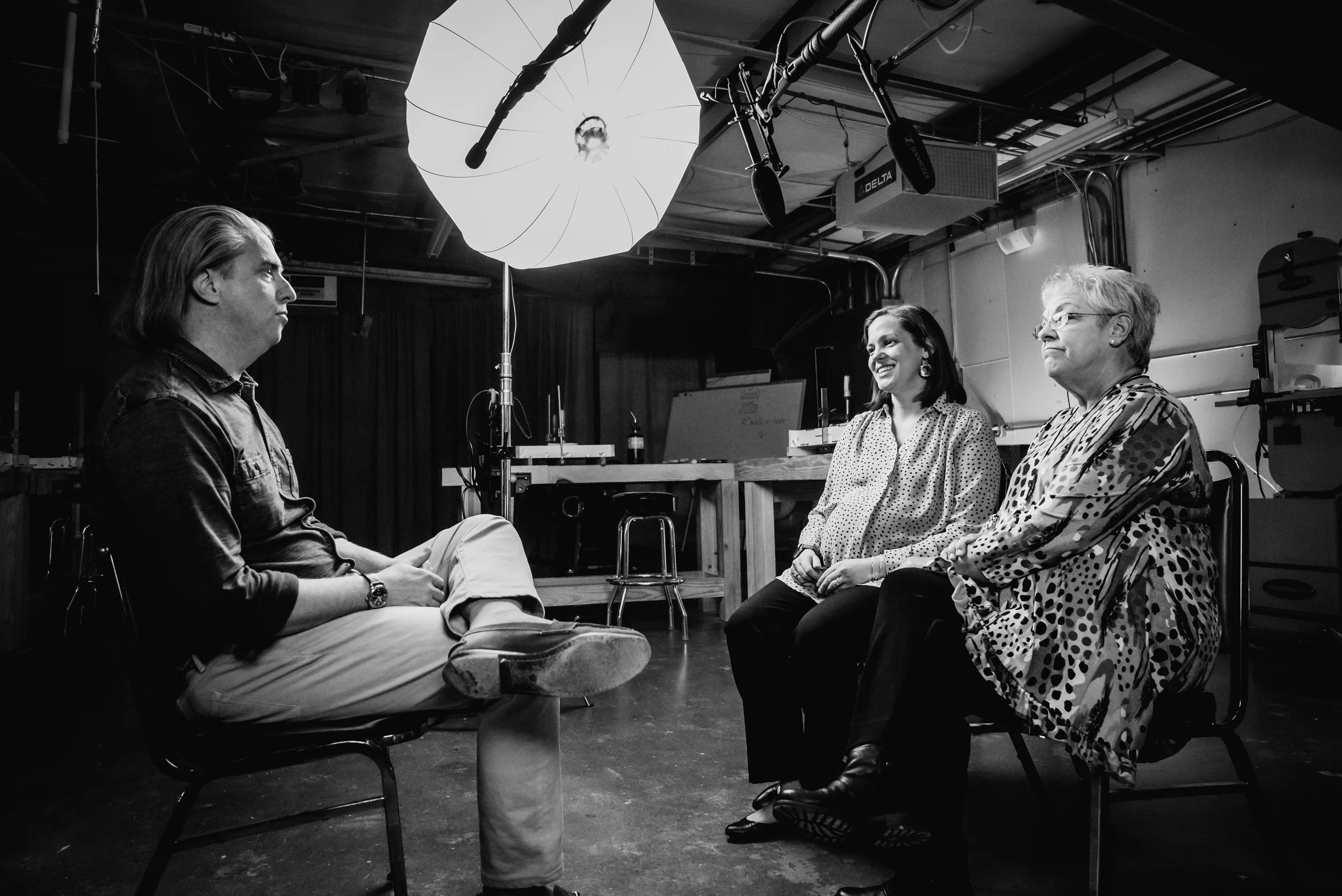
Lisa Tyson is the president of L.A. Barrier & Son, a dump truck company in Lexington, South Carolina that her husband's grandfather started in 1935. Her daughter, Leigh Provost, is the executive vice president and the fourth generation to work there. Leigh left a career as a chemical engineer to come home, and the company has since grown from about 50 trucks to 74. In this episode of Footnotes, John Barnes asks them what keeps a family business alive for 85 years, and what it takes to work alongside your parents and your child. If you own a company between $5 million and $50 million in revenue and a family member might follow you in, this conversation is for you.
How does a family business last 85 years?
L.A. Barrier & Son began in 1935 in North Carolina, when Lisa's husband's grandfather started hauling. His son worked for him, and so did his daughter, who never got added to the name. The company moved to the West Columbia area in the 1970s and later to Lexington. It has always been dump trucks, and for years it followed one contractor from job to job before settling here.
Lisa and Leigh point to two things. First, customers know exactly who to call: when there is a problem, it goes to the top, and Lisa or Leigh picks up the phone. Second, the trucks are new, well maintained and shiny red, and they show up when promised. Keeping the fleet that fresh means buying 10 to 12 trucks a year, which takes real capital and real debt. As Lisa puts it, it is not for the faint of heart.
"The quality and the reliability has always been a key driver of our business."
Leigh Provost
What happens when the next generation wants to come home?
Leigh grew up around the company, and she once practiced her cursive inside her dad's desk drawer, a desk that was still there on her first day back. But in seventh grade she decided to become a chemical engineer. She studied at Clemson and went to work at Milliken in Spartanburg, expecting to stay for 40 years. Then she saw how differently small and large businesses work. She is also an only child, and her parents were nearing retirement age.
When she started thinking about coming home, she asked her dad for calm, careful advice rather than the answer a parent wants to give. He asked her to think hard, and the conversation went on for a month or two before her mother was told, because they did not want to raise her hopes and then take it back. Leigh and her husband Grant had started MBA programs in Spartanburg with a possible move in mind. When the company had a gap in its office, both joined at the same time, about seven years before the interview.
"I want really good advice, not the emotional."
Leigh Provost, on what she asked her dad
Leigh believes the years spent in another town helped. She and Grant had built their own marriage and routines before they were ever in the same building as her parents.
How do you tell customers no without losing them?
Demand for trucks has outrun supply for several years. When five customers each call for 15 trucks the next morning, dispatch does not work first come, first served. It looks at the day, gives extra priority to customers with contracts, and scales everyone back, so one gets 10, another gets 10 and another gets five. Then it tells each customer the truth up front.
The people who feel it most are the dispatchers, who take the frustration day after day until a rainy day gives everyone a break. John observes that you rarely lose business for telling the truth, and 85 years suggests the same.
"We're not disappointing them by lying to them. We're telling them up front."
From the episode
How do you grow from 50 trucks to 74 and keep the small-company feel?
The fleet has grown from about 50 trucks to 74 in six or seven years, and the company now has about 95 employees, more than 70 of them drivers. Growth meant more mechanics, more drivers and more debt, but Lisa says it has been good. About three years before the interview they added a dedicated driver supervisor who also serves as hiring manager, so every driver has a manager who knows them and applications get processed fast. They also added benefits and kept the rules simple: the legal basics like seatbelts and no phones, without timing every bathroom break.
The drivers are younger and less experienced than they used to be. That makes training harder but means fewer bad habits, and younger drivers take to the tablets now in the trucks and the electronic dispatching system the company is adding.
The biggest customers get a different conversation. Before a long highway project, Lisa and Leigh sit down with them to estimate truck needs year by year, for example 30 trucks on average for six months, and then decide whether to add to the fleet. Many smaller customers, some for 20, 30 or 40 years, cannot forecast that far, but the relationships let the two sides talk openly about it.
"We're not nitpicking."
From the episode, on driver rules
What would they tell another family in business together?
Both give the same answer: keep going. Leigh says it is worth it, even though it has no off switch. When your boss is also your mom or dad, you cannot be mad at them and go home. But the business lets her build a different relationship with her parents, and its decisions can bless her family and the generations after hers. Her example: twenty more trucks would make some customers happy, but that may not be the right call for the family right now, and nobody else gets a vote. Lisa calls it probably the best job she could have imagined, working next to her husband, her daughter and her son-in-law.
John adds a sobering context. In his experience, less than 1 percent of family businesses reach a fourth generation, under 5 percent reach a third, and far fewer than half make it from the first generation to the second.
"Keep doing it. It's worth it."
Leigh Provost
What this means for your own business
Leigh's dad told her to think before she answered, and that is the right instinct. A family transition is a financial decision as much as a personal one. Someone has to know what the business is worth, how a successor will pay for it, and what the owner needs to live on afterward. That is the work we do in family business succession planning and business succession planning. If you are weighing it for your own company, talk to us about your numbers.
Topics in this episode: Family Business · Succession
Read the transcript
Show the full transcript (auto-generated, lightly cleaned; speakers not labeled)
Hey, welcome to Footnotes. Today we've got a special episode where we talk to a mother-daughter duo that own and operate a dump truck company in Lexington, South Carolina. We're talking to Lisa Tyson, who is the owner of the business, and her daughter Leigh Provost, who's the Executive Vice President of L.A. Barrier & Son. This business is now in its fourth generation of family ownership and has been going strong for almost 85 years. We also talk about family and where that intersects with business, and about what a business needs to be doing to survive that long. All this is next on Footnotes.
Well, we're here today with Lisa Tyson and Leigh Provost. Lisa, you are the president of L.A. Barrier & Son, Incorporated, and Leigh, you're the Executive Vice President. But you guys aren't sons. No, we're not. I had this conversation just yesterday with someone. You're mother and daughter, and you work together in a multi-generational business. Before we get into the dynamics of the family, why don't we start with how you got here? Where did L.A. Barrier come from, and how long has it been around?
It's been around since 1935. My husband's grandfather started the business in North Carolina. The original name was L.A. Barrier and Son. His son worked for him, but lo and behold, his daughter went to work for him as well, so I guess she never got added to the name. We've been in business since 1935, and in the seventies they moved to the West Columbia area, and not long after that they moved out to the road where we were for a while. Have you always been in the short haul business? Right now it's dump trucks, but it's always been dump trucks. We followed one particular contractor for many years and traveled to all the different jobs until they settled here, and then we diversified and moved around with a couple of different contractors. So you've been in business, I think we could say now, almost 100 years. Yes. Which generation are you, Leigh? I am the fourth generation.
I didn't really have anything to do with the business until I was about 26 or 27. I grew up at L.A. Barrier, of course. The desk I sat at on my first day had my name signed in it, because I practiced my cursive in kindergarten inside my dad's desk drawer, and that desk was still there when I came seven years ago. I've been with the company seven years now, and my husband as well, so we're truly family: both parents and then both myself and my husband. So it sounds like you changed careers. I did. I'm a chemical engineer by trade. I decided in seventh grade I was going to be a chemical engineer, and I don't know that's the choice I would make now as a seventh grader. But I went to Clemson for engineering and worked at Milliken in Spartanburg, and I planned to be there for 40 years. It was my one-stop shop, and it was not a bad place to spend time. I made a really great decision on that. But once I was in the real world a little bit, I recognized the differences between small and large business, and I understood how my parents were able to do things when I was growing up. I'm also an only child, so there's no one else to take over the business, and my parents were nearing retirement age in the next decade. So I considered that maybe this was something I wanted to do, and we made a huge career change and moved to Lexington and started working at L.A. Barrier.
Lisa, as Leigh mentioned, she's an only child, but it seems like you and your husband had a choice. Yes. What was it like when she first chose to forge her own path, and then she turned around? Well, at the time we just knew she was going to stay in Spartanburg. It wasn't far from home, and that would be okay. And then all of a sudden, I didn't get the phone call. Her daddy got the phone call, on purpose. I could interject here for a second. I needed a non-emotional, thoughtful answer. I really wanted him to think about what I was asking. I want really good advice, not the emotional "having my child at home with me is the best thing ever, yes, you should come." I wanted my dad to give me the "I've done this for 40 years, are you sure?" And that's what he did. He said, are you really sure you know what you're asking here? I want you to think about it, I want y'all to process this and think about these certain things, and if y'all are sure, then we'll talk to your mom about this. We didn't want her to get excited and then have us say, actually, we're not sure. It's hard to unring the bell. Even if you change your mind, it's out there. It was probably a month or two between the conversations.
She had worked occasionally during the summers in high school, helping in the office, and that's when she said this is not for me. So when I finally got the call, I couldn't believe she was actually coming home to work for the company. At the time we thought I would come work for L.A. Barrier and Grant was going to find an engineering job in Columbia, which would not have been difficult. It's not that we didn't want him to work at L.A. Barrier, we just didn't think there was a position, and we didn't want to create additional overhead. But this was right as our ownership transitioned, right before we came, and we had a void of people in our office, so it was good if both of us came. We both came on at the same time. It was definitely a huge career change. We had also started, with the anticipation of this maybe happening, MBA school, so we were prepared to start working in a different type of career and company. They knew this was a potential transition for us as we got this additional education to support moving into the business. I guess all the discussions happened over a year or two, ahead of time. Yes.
So there's a period where you were talking, you still had your jobs in the Upstate, and you had this parent-child bond, but now you're going to add a business partner role. What was it like to add a new type of relationship? It wasn't hard for me at all, John, because years ago I had worked in my father's business, so I had a little taste of what it was going to be like. I thought, we get along so well, it's not going to be any problem. And it hasn't been a problem. I'd worked for Joel for years, right next to my husband and my mother-in-law, and I thought, I'll just add our daughter and our son-in-law, that's going to be great. Well, I was right. Best decision I ever made. We always laugh and say this is our retirement plan. We haven't quite got that retirement down yet, but we're working on it.
For me it wasn't really a big hurdle. I considered it, but I grew up with both my parents working together, so that family dynamic had been modeled my whole life. What was different was being a married couple who had established our lives elsewhere, versus a child growing up in the business, and we knew we'd have to transition that. But it's been nice. Previous bosses at Milliken, for example, were wonderful, but they were never my family, so there's a trust you don't quite have. Sometimes it's easier and sometimes more difficult, but most of the time it's easier to go to them with a problem because I know I can be open and get good feedback. Sometimes it's more difficult, because I don't want to go to my dad and say this is difficult, there's a business issue with our relationship. Those don't happen often, and those challenges came later. I didn't really consider them being an issue when we first started.
Do you think starting on your own in a different place helped you be able to come back? Absolutely. We had established our relationship and our dynamics, before kids, which obviously changed things, and we had a good foundation for our marriage. We were married almost five years, four years, when we came here. We weren't in the same town as either of our parents when we first got married, so we established that, and when we started in the business and were near my parents, it wasn't like we didn't know how to create our marriage with one of our families right there. That was a huge benefit for us.
Shifting gears a little: you're in a very competitive industry. Transportation is competitive, margins can be small, there are other players in the area, and you don't service nationwide, you have a somewhat smaller service area. So how does a company hang on for, let's call it, 85 years? John, we've got wonderful customers, repeat customers. In the industry, as far as road work, there's just so much out there to do and there are not enough trucks to go around. Why are there not enough trucks? They're not real cheap, and just getting started, the overhead you have to have and the capital to put up, it's not for the faint of heart to get into. You go into debt like we have. You purchase anywhere from 10 to 12 trucks a year just to change out. But we've been very successful, and I attribute a lot of that to our employees. They've been wonderful.
I think a couple of things have helped us hold on that long. The family aspect really helped in the beginning, and I think it helps now in a different way. Technically we're still a small business, but not like we used to be. We had the small-business feel, where our customers knew we were reliable because we had a couple of trucks and they knew who to talk to. If I have an issue, I go to this person who's the owner and the driver and has only three other employees. We've been able to keep that infused in our business and our culture over the last 85 years, so for an employee or a customer, if we have an issue, we take it to the top. Lisa's in the office, Leigh's available, Lisa will give you her phone number, or me. It's not difficult. That helps our employee culture and our customers, because they know who we are and how to get in touch with us. We're not inaccessible. They're almost like friends, even though they're business associates. That's just how we've always had our business.
Another thing that has always been very important to our family, and to Joel, my dad, is the quality of our service and the reliability. Just like Lisa said, we get new trucks every year. Our trucks are new, well maintained, and they look nice on the road. You know which truck is ours because it's shiny and red and clean, hopefully. Sometimes we can't control it when it's been on a job site. But they also know we're going to do what we say, and if we're not, we're going to let you know. So the quality and the reliability has always been a key driver of our business, and even at 74 trucks now we're still able to do that. That's why we have repeat customers and people who want to work with us: they know L.A. Barrier can supply a large number of trucks and will do what they say, as best we can. The last couple of years the business has exploded, and it can be challenging when everybody needs all of your trucks. We don't commit to more than we can do. We're disappointing everyone, but we're not disappointing them by lying to them. We're telling them up front, I can't get you what you need, but this is what I can do, and that's what we accomplish.
I think that's interesting, because sometimes in business people think, if I make someone upset I'm going to lose business. But 85 years tells you that you'll lose business for other reasons, and you usually don't lose business because you told the truth. Right, and we've always prided ourselves on that. If we can't do it, we'll tell you. For many months over the last several years, especially in the summer and early fall, there's been a lot of telling the truth that nobody likes. What does that sound like in your world? A lot of people listening aren't transportation people. Our dispatch team is the one that really has to do this, and it's very challenging, because everybody's mad at them. Somebody will call in and say they need to get their job done tomorrow and they need 15 trucks. So do five other people who called in the last hour. It's not first come, first served. We look at the day and assess. Everybody needs 15, so we scale it back: you get 10, you get 10, you get 10, you get five, depending on the workload and what we've committed to. We might also have a contract with someone, so we told you we would do this, and you get extra priority. Then we tell them, we can't do 15 trucks tomorrow, but you can have 10. They say, we really need 11, we really need 12, and we do what we can. But it's that daily commitment: this is what we can commit to you, and that's what we put on the schedule. Assuming a truck's not broken down and all the drivers come in the next day, that's what they get. Every day it's the same thing. The problem is those people need to get their job done too, and they really need 15 trucks, and they say, well, you're putting us out. We can only do what we can do. It can really wear on our dispatch team when that happens every day, over and over, for weeks on end. Then we finally get a rain day and everybody gets one day to catch up in the shop and everything else.
How has the business changed, over 85 years but even in the last decade? People look at a business like that and say, you're just hauling stuff. You are still hauling things, but you as insiders know things an outsider wouldn't notice. We've grown exponentially. When Leigh and Grant came we had maybe 50 trucks, and we're up to 74 now, and that's been six or seven years, almost a 50 percent increase in fleet. We've had to take on so much more. We need trucks, we need to keep them all up, we've had to hire more for the shop, more drivers, and a lot more debt. It's been very different for us, but it's been good. We've had no issues.
What have you seen with drivers and mechanics, these skilled positions? Are they easier or harder to find? At first it was harder, but then they just showed up. We've also done a few things. Leigh brought in new ideas from the corporate world, and they've been very beneficial for our employees. We've added extra benefits. A big change, almost three years ago now, was adding a dedicated driver supervisor, who is also our hiring manager. All of our drivers, of whom there are 70-plus now, have a person they go to, a manager they know well who knows them well. That has been a drastic change, because we have someone who can focus on the drivers, and they have someone to come to when they need to complain or have a question. As the hiring manager he's able to process applications really quickly. We've always had a decent influx of applications, but having someone turn them over quickly has helped us a lot.
I mentioned earlier we've always had that family culture, and going to the top is not difficult. Even though we have 95 employees now, we're trying to keep that infused in our business and keep a little of the small feel. We're not creating all the rules for our drivers that corporate companies have to have. It's not that those rules are bad, and you have to have them when you're large, but we get to pick and choose what rules to create. We have the basics, like you have to wear your seatbelt and you can't use your cell phone, because those are against the law. But we're not saying you get a ten-minute lunch break and a ten-minute bathroom break, and if you stop for more than 15 minutes we're going to yell at you on the radio. We're not nitpicking. So our drivers are more willing to stay, and maybe bring their friend who needs a job. That has helped us get drivers.
The experience level of the drivers we're getting, and the age, is a lot lower. We're getting many more younger drivers, and a lot less experienced. Is that necessarily a negative? Sometimes. It's nice when you can put a driver in a seat who has worked for a dump truck company before, train them for a couple of days, and they know where to go and what to do. Versus a driver who might have a CDL but has never sat in a dump truck in his life, which can be challenging. So it's positive and negative: it's harder to train them, but you might not have to break some bad habits. And the technology seems easier for a younger person. We have tablets in our trucks, and they can use those a whole lot better than us old fogies. That's actually becoming more of a requirement for a lot of our customers, and we're trying to add an electronic dispatching system right now. We know it's going to be a big hurdle for some of our drivers, but for others it'll be, I know how to do this already, it's point and click. So with a lot of newer, younger drivers, it'll be much easier to implement those kinds of processes.
Something you said earlier about customers requiring certain things: you need customers to call you and hire you, but in terms of that deeper relationship, where you're making investments in your fleet because of their needs, what are those relationships like, and how do you balance running your business and maintaining profitability with customer pull? That has been something I've struggled to understand, because I've always been of the mind that we make decisions for our business because of us, not because our customer needs extra trucks. Luckily we have other people in our business who balance my opinion, like my dad and our salespeople, who say, no, they need more trucks, you don't understand what it's like to have somebody mad at you all the time, like our dispatchers. A lot of those relationships have been built over the last 50 years through Joel, and many of them have transitioned to our sales team, most of whom have been with us five to ten years. Before big projects, we sit down with our bigger customers and ask, what are your needs going to be on this project for three years? We don't do that with everyone, and most customers can't give us that kind of forecast. I'm talking about the big interstate projects, like Crossroads, that last eight years. But they sit down with us, and we have lots of conversations: these are our estimated needs for this year, this year and this year, with peaks and valleys. Then we can say, if we commit to this project, we'll need 30 trucks on average for six months of 2024. What does that do to our fleet? Do we need to add more? Do we need to plan on maybe not helping some of these customers? We do our best to look at that. A lot of those relationships have been built for decades. There are still a lot of smaller construction companies we've worked for for 20, 30, 40 years, and they're still our customers. It's nice, because we have that camaraderie and openness where they can sit down with us and say, we really want you to help us, and this is what we'd need to do that. It doesn't always happen like that, but a lot of the time it does.
Changing gears again, and I'm very interested in your answers, because other people listening may be in a family business. It might not be transportation, but they've got that extra layer of relationship with this business partner, in addition to father and son or mother and daughter, aunt, uncle, whatever. Knowing what you know now, and knowing there's more to come, what advice do you give people who are in business with family members? You want to go first? Go. I would say: keep doing it. It's worth it. I don't have siblings, so I get the beauty of it just being me and my parents. The next generation, which we hope will be in the business, there are going to be at least three of them. They might not all work there, or maybe none of them will, but the choice is there, and they could return or come back. To me it's: keep doing it, it's absolutely worth it. The freedom you get in a family business is phenomenal. I get a different type of relationship with my parents than if I didn't work here, and that has blessed my life. It can be very challenging and frustrating at times, because if your boss is your boss and not your mom or dad, you can be mad at them and not feel bad, but I have to reconcile that. You don't have the luxury of saying, I'm leaving and I'll be back on Monday. It's 24/7. That is a challenge, and it can be tricky, because my parents can upset me in a different way than a boss can, which doesn't feel good. But it's so worth it to keep going and to be involved and dig in. And our business blesses our whole family. I'm not working for a corporate company or some other owner. I might make a really good paycheck, but at the end of the day we get to make decisions together that bless our entire family: me and my husband and my kids and future generations. To me, all of that makes it worth it. So my phrase would be: keep going, keep doing it.
I would have to say the same: keep going. At first I only worked with my husband and my mother-in-law, and then as we grew, here comes our daughter and our son-in-law. It's probably been the best job, give or take, I could have imagined, simply from being able to work with my child and my husband. I wouldn't have it any other way. It's fun because we're all working for the same goal. At the end of the day, yes, technically my mom is the owner and it's her money, and I remember that. I don't own it yet. But we're making choices for our family. If we had added 20 trucks, some of our customers would be so happy. That's not a good decision for our family right now. Maybe over five years it would be a good decision to buy 20 trucks, and maybe in five years we'll assess. But we don't have to make decisions for other shareholders or our customers if it doesn't align with our family and our values. We always seem to have the same values, and obviously part of that is because they raised me, so there's a little transfer there.
But to the point, you were raised in the company, and you made a conscious decision to go down a path that was not L.A. Barrier, and not for a short time. It's not like you left for six months and came back. Seven years is plenty of time to get into a career, especially at a large company like Milliken, where you probably had a career path. There were probably people disappointed that you and Grant were no longer at the company because they had plans for you, and now there are some people very happy that you're back, because they also have finance experience. I think that's an interesting dynamic. And what both of you said about "just keep going": in our business we see other family businesses, and I think most would say that, but not all. The statistics on businesses going into a fourth generation: less than 1 percent of family businesses even make it to that point. It's under 5 percent that go to three, and way less than half go from one to two. So you've done something that less than 1 percent of businesses in our country are able to do. And the longevity, and I'll use the word heritage, that's been strung along across the generations, is really impressive.
If people think, this sounds like a great place to work, or we want to hire these guys, or they own a family business and want to talk to you, how can they find you? The company website, and email is always the best way to reach both of us. Especially with Leigh being out of work for a couple of weeks with a new child, but we're always excited to talk to small businesses and family businesses. Every small business and every family business is very different, and I always appreciate talking to people who are in it, who have a different perspective from my own. I want to learn, but I like to share the information as well. Well, thank you all for sitting down and doing this, taking time out of your day to go run a busy company. Yes, we do. And keeping 74 trucks on the road doesn't happen by accident. No, it does not. We have some wonderful employees. Thank you all for sitting down with us and sharing your story. Thank you so much.